7 Course Meal: Complete Menu, Courses, Order and Meal Ideas
A 7 course meal is a single seated dining experience in which seven different courses of food are served sequentially. Rather than serve up the entire feast at once, each dish arrives when it is intended to be eaten, giving diners the chance to appreciate different flavors, textures and ingredients with intervals.
A traditional seven-course menu, which means it will be lighter dishes to begin with and build to a final savoury course before you have dessert! This may differ by restaurant, cuisine type and event. Modern tasting menus have since adapted this structure for instance, to be vegetarian or vegan-friendly, seafood-based, by regional cuisines, etc. It is good to remember that a breakfast menu and a very formal seven-course dinner are quite different species if you are finding a jollibee menu option while studying things like types of meal structure. A breakfast menu typically centres around a handful of full dishes, while a seven-course meal is crafted as an experience with enough room for fabled dining numbers.
What Is a 7 Course Meal?
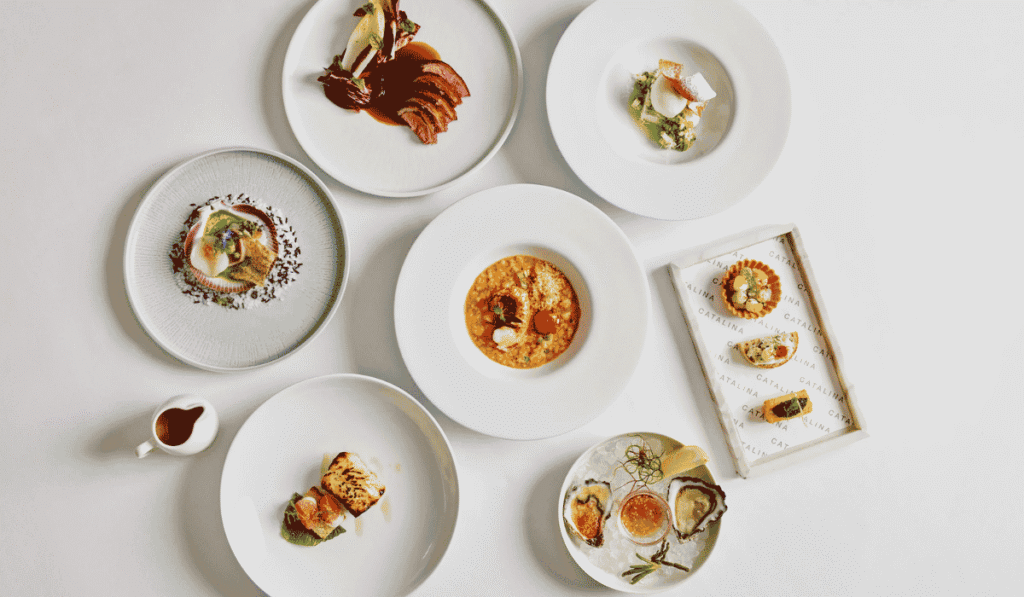
A seven-course meal is a formal or fine dining meal consisting of seven different and distinct dishes. Each course serves a specific purpose. Some bring an attraction of flavors, some the meat on your plate as the resource of protein; all will examine your senses, either providing you a perfect intermezzo for to reset before entering in dessert mode too sweet teeth boys and girls?
The myriads of course outlines and formative frameworks obviously demonstrate that there is no one size fits all seven-course sequence. Here, for instance it could be the more modern, amuse-bouche, starter, soup, fish or seafood palate cleanse main course and dessert. The one more conventional full-course type of dinner can be hors d’oeuvres, soup, starter, salad, entree (also referred to as wider principal course), dessert and case. One of the reasons seven-course menus are an attractive option for chefs. But rather they make a story of the seasonal ingredients and do many small portions rather than one single plate.
7 Course Meal Sequence
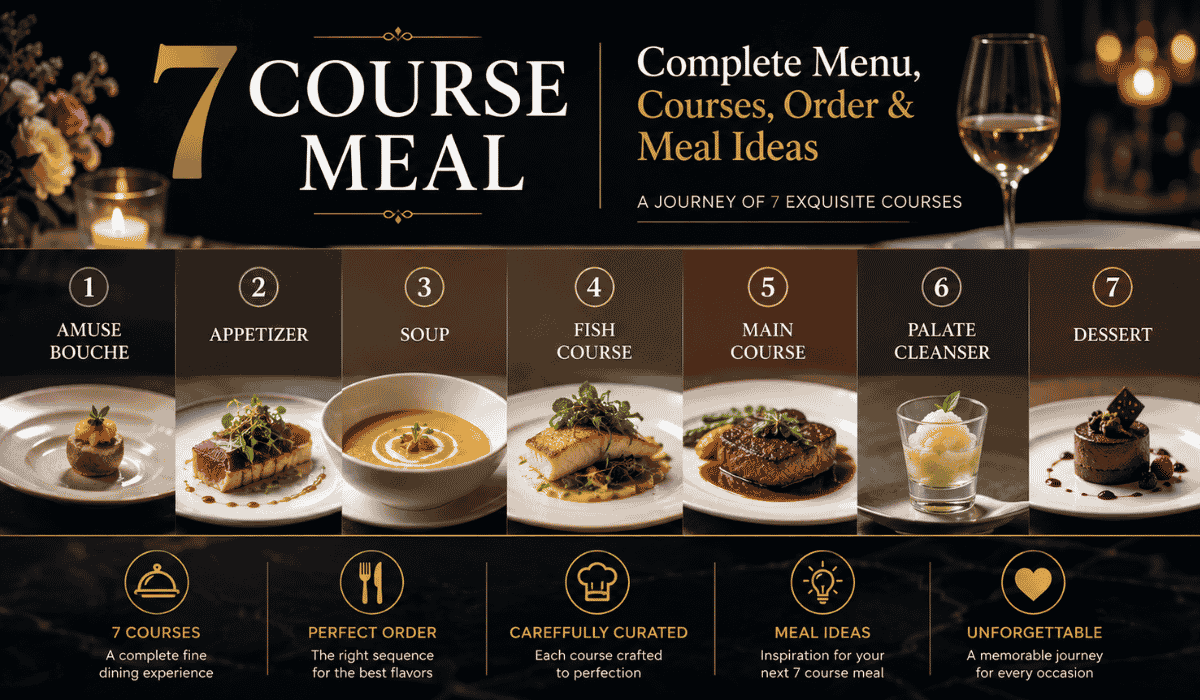
The following is a practical and modern sequence for a seven-course dinner:
| Course | Typical Dish | Purpose |
| 1 | Amuse-bouche | Welcome and stimulate the appetite |
| 2 | Starter/Appetizer | Introduce the main flavor theme |
| 3 | Soup | Add warmth and depth |
| 4 | Fish or Seafood | Offer a delicate protein |
| 5 | Palate Cleanser | Refresh the palate |
| 6 | Main Course | Serve the centerpiece dish |
| 7 | Dessert | Finish with a sweet course |
The sequence can be changed. Some menus use a salad or cheese course instead of fish or a palate cleanser. The important point is to create a smooth progression rather than simply serving seven unrelated dishes.
Read More: Jollibee Breakfast Menu | Wendys Frosty Flavors | Dairy Queen Ice Cream Cake Menu
Course 1: Amuse-Bouche
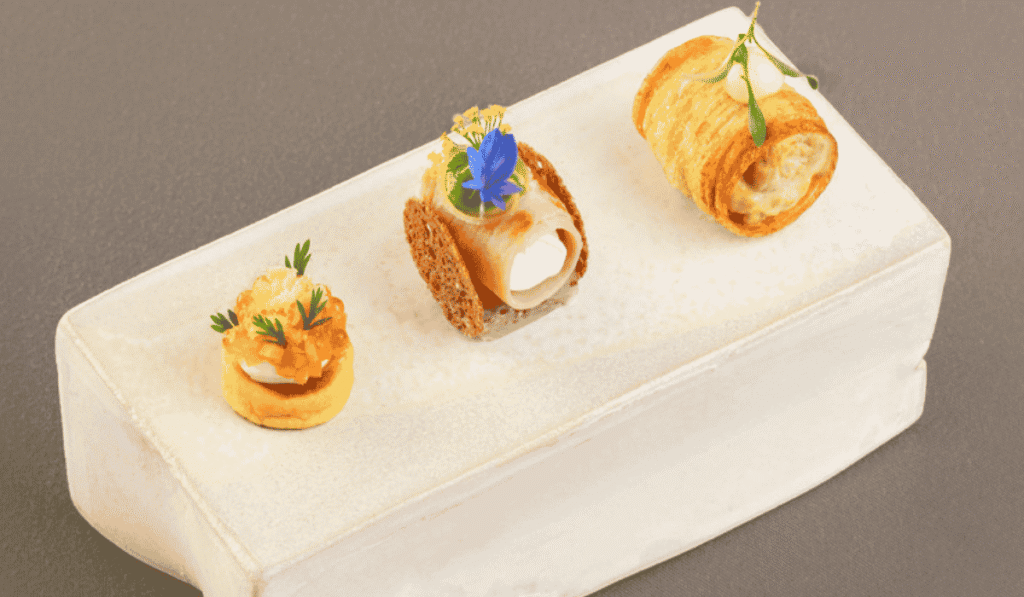
A typical first course is an amuse-bouche, which is a tiny bite chosen by the chef. Its purpose is to greet the guests and prepare them for an early look at the style of preparation in which they will be eating their meal.
These can be anything from a small crostini, a spoonful of cold soup, some sort of crispy vegetable bite to paneer preparation. Amuse-bouche needs a good hard kick of flavor, but just one or two bites will do. It must drive anticipation for the next course instead of leaving them stuffed.
Course 2: Starter or Appetizer
The second course is typically a simple starter or appetizer. The main ingredients and the flavor direction of the menu would be introduced by the chef here.
Burrata with tomatoes, vegetable tartare, prawn ceviche or stuffed mushrooms are some of the most popular options but a small Indian chaat-inspired plate is also on the menu. Portion Control in Full Meals It should be substantial enough to satisfy, yet not so large as to ruin guests’ appetites for the courses that follow.
Course 3: Soup
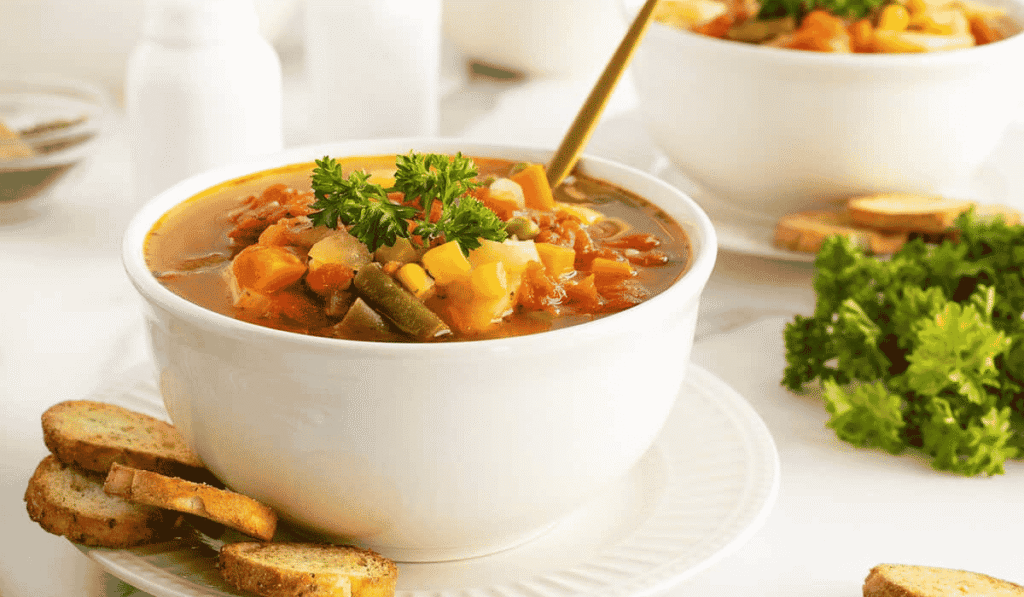
Another layer to the meal is soup, which adds texture and temperature. Soup is normally served smaller than a regular bowl of soup within an official seven-course menu.
And what do they all have in common?: Tomato soup, mushroom velouté, sweet corn soup or pumpkin soup and reduced Indian shorbas. The soup must relate to the previous course without too much duplication of essences. For example, an accompanied creamy soup is followed by a lighter seafood course in order to balance the menu.
Course 4: Fish or Seafood
The next course, which could be fish or seafood, will serve as a gentle segue to the main meal. Grilled prawns, seared sea bass, salmon (fillet), fish carpaccio or some light preparations with fish are Examples.
The portion should not be too large since there is a big main course yet to come. In a seven-course tasting you typically select one main course, rather than presenting enormous lists in more casual restaurants where there could be quite a few options on the modern main course menu. Seafood can be substituted with grilled vegetables such as peppers, paneer, mushrooms or another restaurant quality plant based dish for vegetarian menus.
Course 5: Palate Cleanser
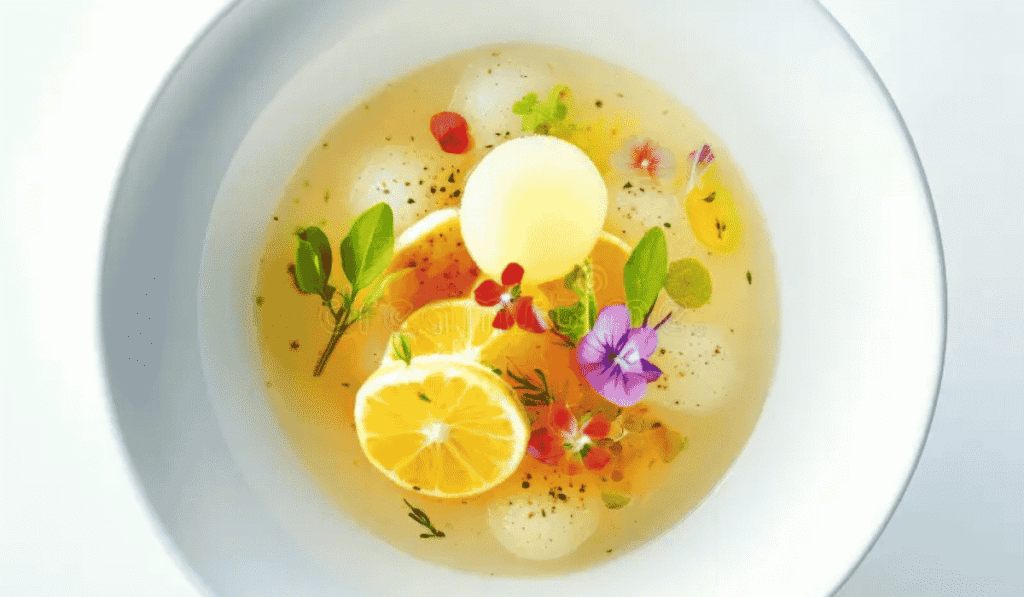
The palate cleanser is an interesting part of a 7 course meal. Generally small, cold and crisp.
How about lemon sorbet, cucumber mint granita, green apple sorbet or a simple citrus preparation? It is intended to cleanse the palate prior to the most luxurious savory course.
Do not mistake a palate cleanser for a dessert. It serves as a middle course that should stay light, not sweet and heavy.
Course 6: Main Course
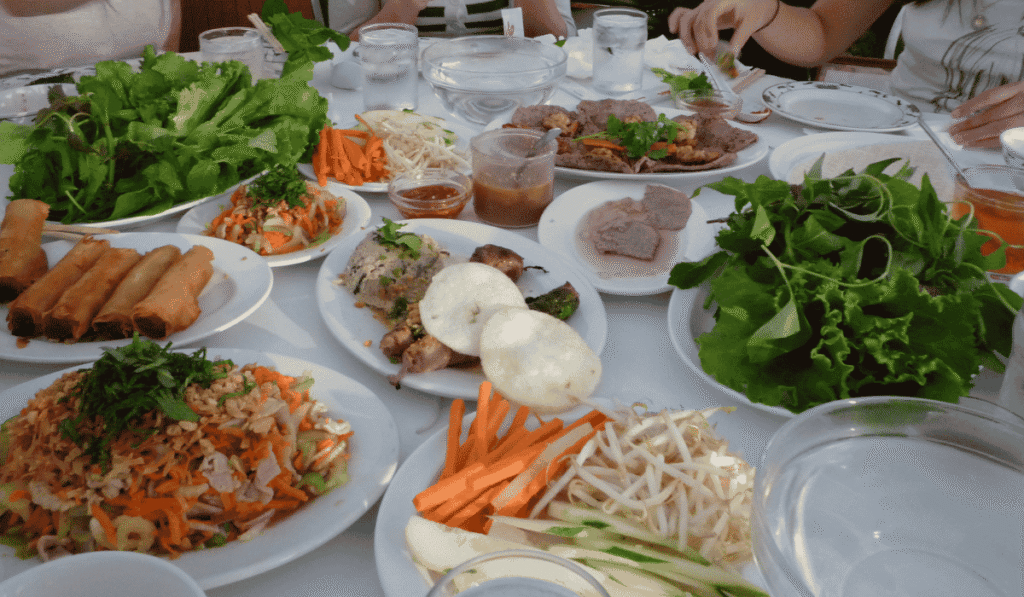
The main course is the centerpiece of the meal. This is generally the most substantial savory course and often features a premium protein or a creative vegetarian preparation.
Possible main course dishes include:
- Herb-crusted lamb with seasonal vegetables
- Grilled fish with lemon butter sauce
- Roasted chicken with herbs and jus
- Paneer Wellington with vegetables
- Mushroom risotto with parmesan
- Slow-cooked beef with mashed potatoes
- Indian-style paneer or vegetable preparations
The main course should feel more substantial than the earlier servings, but portion control still matters. A seven-course dinner is about variety and pacing, not serving seven full-sized restaurant plates.
Course 7: Dessert
Dessert brings the meal to a satisfying close. It can be rich and indulgent, but it does not always need to be heavy. Popular choices include chocolate fondant, crème brûlée, cheesecake, mango panna cotta, tiramisu, gulab jamun-inspired desserts, or fresh fruit with cream.
A good dessert should feel connected to the rest of the menu. For example, a mango dessert can work beautifully after an Indian-inspired meal, while chocolate and coffee can create a classic ending to a European-style dinner.
Full Course Menu vs. 7 Course Meal
The full course menu, a.k.a the seven-course menu are closely tied but not identical. A full-course meal might contain only three courses (an appetizer, a main dish, and dessert). It can include many more courses too. The seven-course format is just one of many ways to structure the full course dining experience.
For example:
| Meal Type | Common Structure |
| 3-course | Appetizer + Main + Dessert |
| 4-course | Soup + Appetizer + Main + Dessert |
| 5-course | Appetizer + Soup/Salad + Main + Dessert |
| 6-course | Appetizer + Soup + Salad + Main + Dessert + Extra course |
| 7-course | Seven individually served courses |
| 8-course | Seven-course structure plus an additional course |
This makes it easier to understand why a seven-course dinner can look different from one restaurant to another.
How Long Does a 7 Course Meal Take?
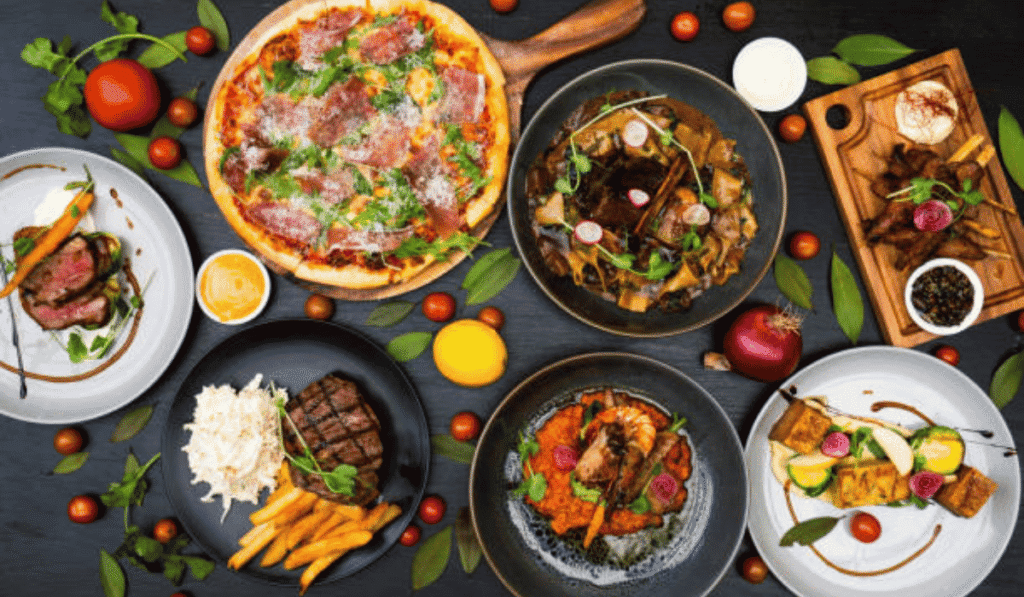
A restaurant like an upscale one we recommend where everyone orders a seven course meal at the proper pace can take approximately two to three hours; depending on the speed of preparation, service style and conversation of each person. Instead of hustling you to the end, a good restaurant guide will tell you to stave off your meal with natural pauses between courses.
The meal should feel relaxed. There should be enough time between courses for the last course to actually be eaten and enjoyed before the next plate arrives.
Gainfully employed: These are great for a private dinner where you can have all the ingredients prepared beforehand and done with only the last stage of cooking and plating whilst receiving guests.
Read More: Chick Fil A Sandwich Price | Chipotle Restaurant Menu | Sonic Slush Menu
How to Plan a 7 Course Meal at Home
You do not have to go to a restaurant to prepare a seven-course meal. It can be done at home with some preparation.
Start by choosing a theme. This can range from an Indian to Italian, Mediterranean, vegetarian, seafood or any other fusion menu.
Next, plan the progression. Start with lighter flavors and until a full-bodied course, end with dessert. Don’t repeat the same main ingredient for every course.
Last, be as prepared for it as you can. There are also soups, sauces, desserts, as well as garnishes and some appetizers that can be prepared ahead of time before the guests arrive.
While a jollibee breakfast menu allows for quick morning meals, a seven-part dinner is about pacing, presentation and diversity. Just looking at these two formats really speaks both to the way we can greatly differ menu structure for different dining occasions.
Tips for Creating Better 7 Course Meals
A successful seven-course menu is about balance. Keep these ideas in mind:
Keep portions small: Seven courses should not mean seven oversized meals.
Create flavor progression: Start gently and gradually move toward stronger, richer flavors.
Add variety: Combine crunchy, creamy, soft, crisp, hot, and cold textures.
Avoid repetition: Do not use the same protein, sauce, or cooking method in every course.
Consider dietary needs: Vegetarian, vegan, gluten-free, and allergy-friendly alternatives can be planned in advance.
Keep dessert memorable: The final course is often the last flavor guests remember.
Sample Indian 7 Course Meal
Indian cuisine works especially well with a modern seven-course format because it offers a wide range of spices, textures, and regional ingredients.
| Course | Sample Indian-Inspired Dish |
| 1 | Mini crispy lotus stem bite |
| 2 | Burrata with mango and curry-leaf dressing |
| 3 | Smoked tomato shorba |
| 4 | Tandoori sea bass or grilled paneer |
| 5 | Raw mango and mint sorbet |
| 6 | Slow-cooked lamb with saffron rice |
| 7 | Cardamom chocolate tart |
The menu can easily be made vegetarian by replacing the seafood and meat with paneer, mushrooms, jackfruit, lentils, or seasonal vegetables.
When browsing a main course menu, remember that a traditional restaurant menu may offer many main choices, while a tasting-style seven-course dinner usually has one carefully selected centerpiece.
7 Course Meal vs. Jollibee Breakfast Menu
Jollibee breakfast menu searchers usually want to look up breakfast items, prices, meals or portions. Whereas a seven-course meal only takes into account the number of courses and the order.
Hence, the two belong to different category pages of the menu. One refers to breakfast at a specific restaurant, and one describes a multi-course. This is also useful when looking online for entire meals, restaurant menus/lists, tasting menus and course-type format.
Why Is a 7 Course Meal Popular?
Chefs have greater freedom to play with presentation and taste in a seven-course dinner. The guest enjoys multiple dishes in a deliberate sequence, rather than working through one large entrée.
It can also hear your most special occasions. Multi-course menus may be used for weddings, anniversaries, private dinners, tasting events and high-end dining experiences since they require the guests to take their time and enjoy the meal.
The format is also flexible. The courses may be adjusted for season, local ingredients, dietary restrictions or food preferences and type of cuisine.
Read More: Chili’s Kids Menu | Applebees Drinks Menu | McDonald’s Drink Menu
Final Thoughts
A 7 course meal usually contains more than seven plates of food. It is a work of art that has been planned, with each course serving a purpose. The typical meal moves from light and subtle flavors to a hearty entree then comes dessert.
Menu planning becomes much easier once you have a grasp on the order of courses, whether you’re throwing an elegant dinner at home and want to research what a full course menu looks like or simply looking for this style of main course dish. Rule 1: Flexibility is the most important rule. A seven-course menu doesn’t need to consist of the same dishes, and so forth. That same seven course sequence has been employed in modern cuisine but adapted across different cuisines, ingredients, and occasions.
FAQs About 7 Course Meal
1. What are the 7 courses in a 7 course meal?
A common modern sequence is amuse-bouche, starter, soup, fish or seafood, palate cleanser, main course, and dessert. However, the exact order can vary by restaurant and culinary tradition.
2. How long does a 7 course meal take?
A seven-course meal commonly takes around two to three hours when served at a relaxed pace. Fine-dining restaurants may take longer depending on preparation and service style.
3. Can a 7 course meal be vegetarian?
Yes. A vegetarian seven-course menu can include vegetable appetizers, soups, salads, paneer, mushrooms, grains, plant-based mains, palate cleansers, and desserts.
4. What is the difference between a full course menu and a 7 course meal?
A full course menu is a broad term for a meal made of multiple courses. A seven-course meal specifically contains seven planned servings. A full-course meal can have three, five, seven, or even more courses.
5. What are good main course dishes for a 7 course meal?
Good main course dishes include grilled fish, roasted chicken, lamb, beef, paneer, mushroom risotto, or other substantial vegetarian preparations. The best choice depends on the cuisine and the courses served before it.